
A practical report on how customers find restaurants now, and what owners can do about it
It’s 7:30 PM on a Friday, and someone in London wants dinner. They don’t have a restaurant in mind. They just want somewhere good, nearby, reasonably priced and open now.
A few years ago, they might have searched Google for “restaurants near me” and picked from the first few results. Today they might open Google Maps and check reviews and photos, look on Instagram, search for a particular kind of food, or ask an AI assistant:
“Find me a good Italian restaurant near Soho for dinner tonight.”
Customers are spending less effort finding a restaurant and more on finding the right one.
1. Google Search is still the starting point
Google is still one of the most important places people find restaurants, but their searches are getting more specific.
Instead of:
- “restaurants London”
- “pizza near me”
customers increasingly search for a particular need:
- “best pizza near Soho”
- “late night restaurants near me”
- “Indian restaurant for a family dinner”
- “cheap date night restaurants”
- “restaurants open after 11pm”
So a restaurant can show up well for one search and barely at all for another.
Google also shows customers much more directly in the results, including opening hours, location, reviews, photos and links to menus.
For restaurant owners, that means a website alone isn’t enough. The right information has to be there when someone is ready to decide.
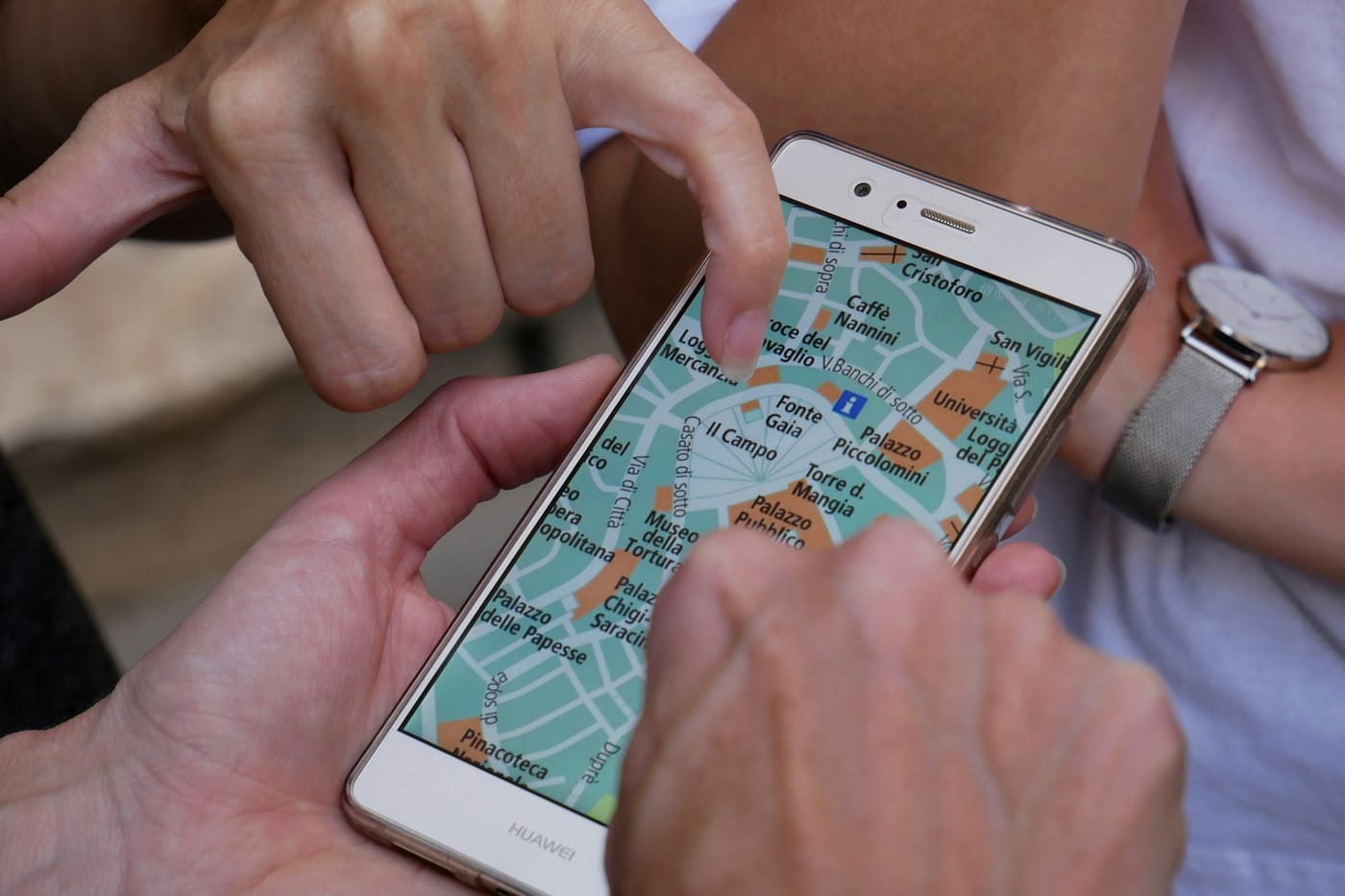
2. Google Maps has become a restaurant shortlist
Back to that customer looking for dinner. They open Maps, and now they’re comparing five restaurants within 15 minutes.
They look at:
- Rating
- Reviews
- Food and restaurant photos
- Menu
- Opening hours
- Distance
- Contact details
- Booking options
Google’s Business Profile tools let restaurants manage the menus, dishes, photos, opening hours, reviews and other details shown across Search and Maps. In practice, the Google listing is the restaurant’s shop window online.
Where Growtality fits
Growtality helps restaurants turn that first look into a booking or order, with ordering, reservations, CRM and marketing tools in one place instead of spread across different platforms.
3. Photos and reviews influence the final decision
A customer may find ten restaurants, but they probably won’t visit ten websites. They narrow the list quickly, and a restaurant with recent photos, clear menu information, genuine reviews, accurate opening hours and a complete business profile leaves them fewer questions.
Reviews matter most, because they give customers something a restaurant’s own advertising can’t: the experience of other diners. Google shows review scores, review counts and selected reviews across Search and Maps, and the customer is checking whether they can trust the place.
4. Social media creates the craving
Not every restaurant search starts with someone looking for food. Sometimes the food finds the customer first: a TikTok video of a huge burger, an Instagram Reel of a hidden London café, a chef making a signature dish, or a creator saying:
“You HAVE to try this place.”
The customer wasn’t planning to go, and now they’re saving the restaurant for later.
That’s the difference from Google. Google catches people who already want something, while social media can make them want it. So visual content is part of how customers find you, especially for new dishes, experiences and places with a strong personality.
5. AI is changing the question customers ask
Instead of scrolling through a page of links, a customer can now ask:
“Where should I take my parents for dinner in London?”
Or:
“Find a quiet restaurant near me with vegetarian options.”
Or:
“What’s a good restaurant for a birthday under £40 per person?”
The customer gives the AI the context of their evening as well as a few keywords.
Google has been heading this way already. Its AI Mode can show local restaurant information such as ratings, reviews and opening hours while helping people decide.
And in August 2026, Google expanded its AI-powered Ask Maps features, so people can make more conversational restaurant requests and even prepare food orders through supported partners.
Search used to answer “where are the restaurants?” AI can now answer “which restaurant suits this person?”
6. AI visibility is becoming another layer of local discovery
A restaurant can’t control exactly what an AI recommends, but it can control the information available about the business.
A 2026 audit of 4,776 restaurants, cafés and bars found that 85.6% of venues were never recommended by any of four tested AI systems. Venues were more likely to appear if they had their own website, more reviews, price information and mentions on other sites.
There’s no secret AI ranking trick. AI tools need reliable information to understand a restaurant. If its name, location, menu, prices, cuisine, website and customer reputation are unclear or inconsistent across the web, these systems have less to work with.
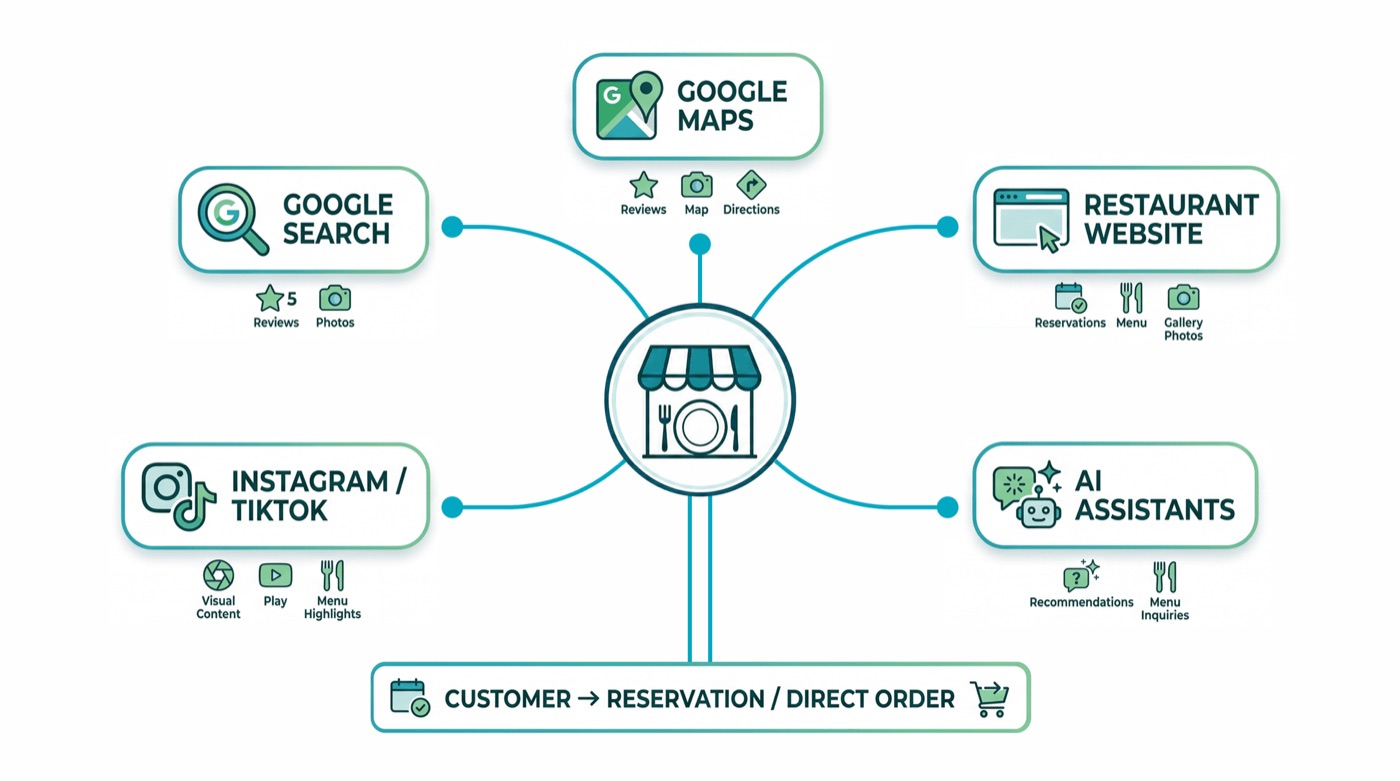
7. “Near me” is becoming “right for me”
This may be the biggest change. Customers now want to know what’s nearby that suits them, which could mean:
- Vegetarian options
- Family friendly
- Pet friendly
- Quiet atmosphere
- Date night
- Late night
- Affordable
- Fine dining
- Outdoor seating
- Accessible location
So restaurants need to say more than what cuisine they serve. They need to say what kind of experience they offer and who it’s for.
8. The restaurant website still matters
AI and Maps make accurate information on your website more important.
A good restaurant website answers these questions quickly:
- What do you serve?
- Where are you?
- When are you open?
- What’s on the menu?
- How much does it cost?
- Can I book?
- Can I order?
- Why should I choose you?
The fewer questions a customer has left before ordering or booking, the better.
9. What restaurants should focus on in 2026
A practical checklist:
- Keep Google Business Profile information accurate.
- Update opening hours, especially around holidays.
- Keep menus and prices current.
- Add high-quality food and restaurant photos.
- Ask genuine customers for reviews.
- Make the website mobile-friendly.
- Make reservations easy to complete.
- Make direct ordering easy to find.
- Create social content that gives people a reason to visit.
- Keep restaurant information consistent across the web.
- Build useful mentions outside your own website.
- Track where customers are discovering the business.
Google gives restaurant owners Business Profile performance data, including searches, menu interactions and bookings, so you can see how customers are finding you.
The takeaway
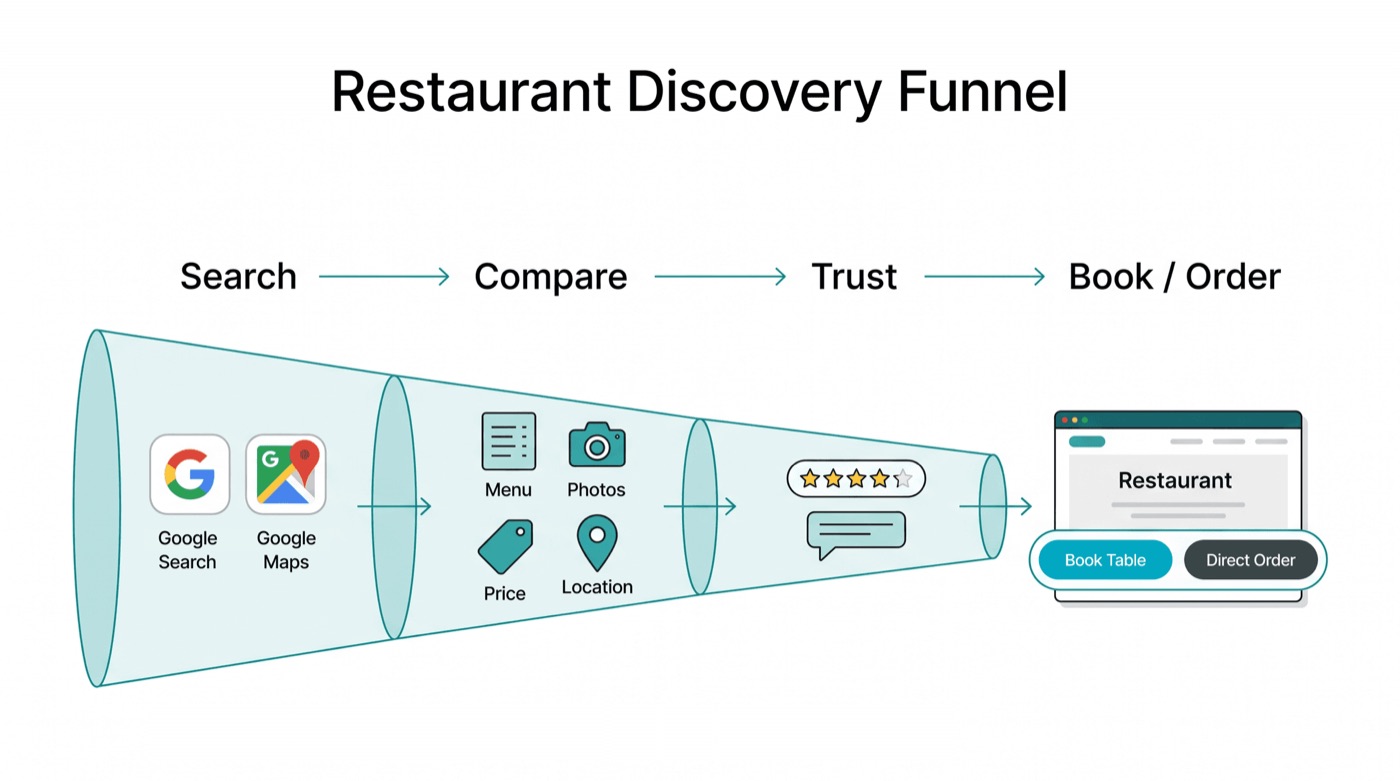
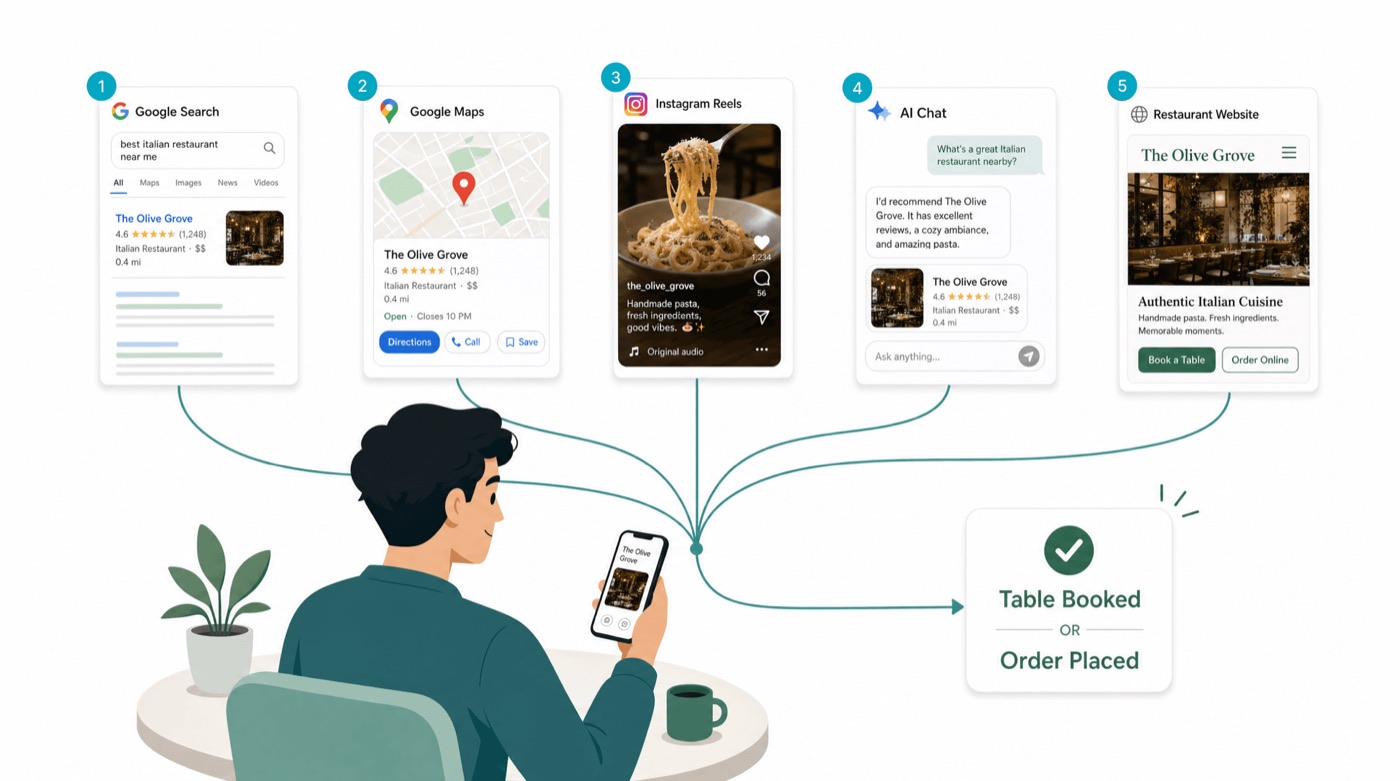
In 2026, customers find restaurants in several places at once. Someone might spot a restaurant on Instagram, check it on Google Maps, look at the menu on its website, ask an AI for another suggestion, read three reviews, and then order directly.
The restaurants that do best will make each of those steps easy, so they’re easy to find, trust, choose, and book or order from, wherever the customer is looking.
Questions owners ask
How do customers find restaurants in 2026?
Through Google Search and Google Maps first, with social media creating the craving and AI assistants like ChatGPT increasingly answering questions such as where to eat tonight. Most guests compare a shortlist on Maps by rating, reviews, photos, menu and opening hours before choosing.
Do AI assistants recommend most restaurants?
No. A 2026 audit of 4,776 restaurants, cafés and bars found that 85.6% were never recommended by any of four AI systems tested. Restaurants can't control what AI recommends, but they can make sure accurate, consistent information about them is available.
Does a restaurant still need a website if guests use Google Maps and AI?
Yes. Maps and AI assistants use the website to confirm menus, hours and details, and it's where a guest who has found you can book or order directly without a marketplace in between.