
Not long ago, calling a restaurant took patience. You’d let it ring, get put on hold during the dinner rush, or hear a voicemail asking you to call back later. Now most people just hang up.
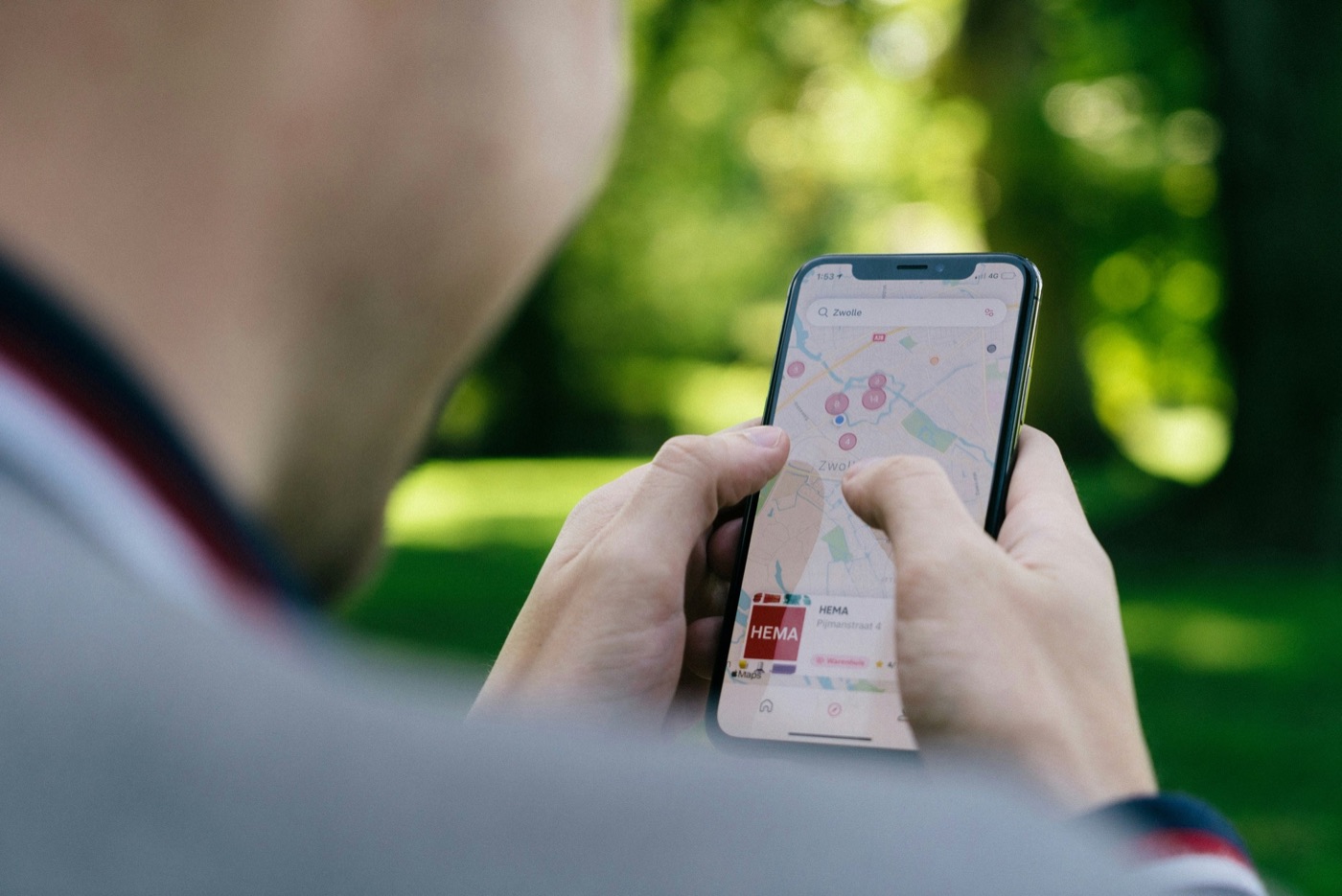
Diners have got used to Amazon, Uber and Netflix, which answer instantly and work around the clock, and they now expect the same from restaurants.
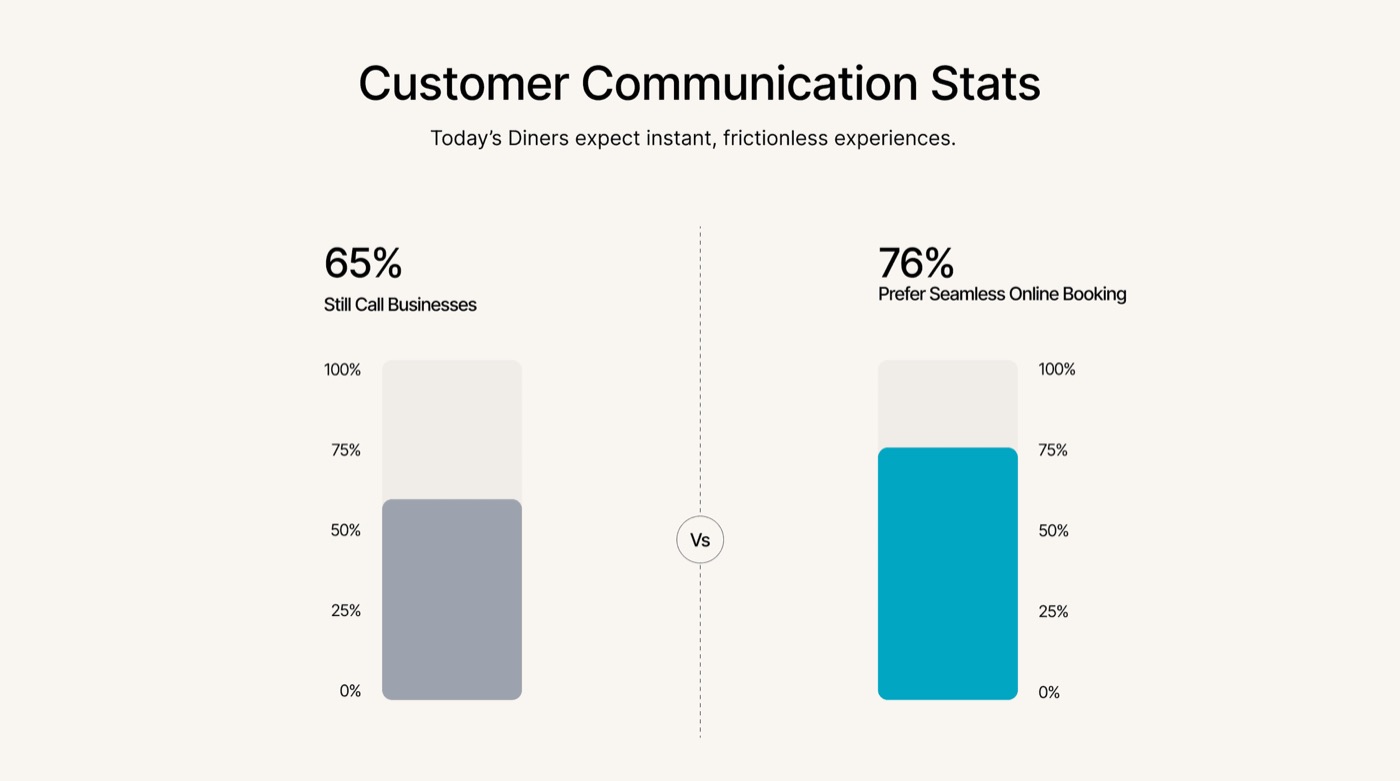
In the UK, 65% of consumers still contact businesses by phone, and 31% say it’s their preferred channel. Yet 76% of diners prefer booking through a restaurant’s website, and they expect a quick, easy experience however they get in touch. Whether a person or a system picks up matters less to them than getting an answer straight away.
So when a restaurant doesn’t answer the phone, it loses more than the call: it loses revenue, reservations and some of the caller’s trust.
The hidden cost of every unanswered call
Picture a busy Friday evening. The dining room is full, servers are rushing between tables, the kitchen is flat out, and the phone keeps ringing with no one free to pick it up. In many restaurants that happens dozens of times a week.
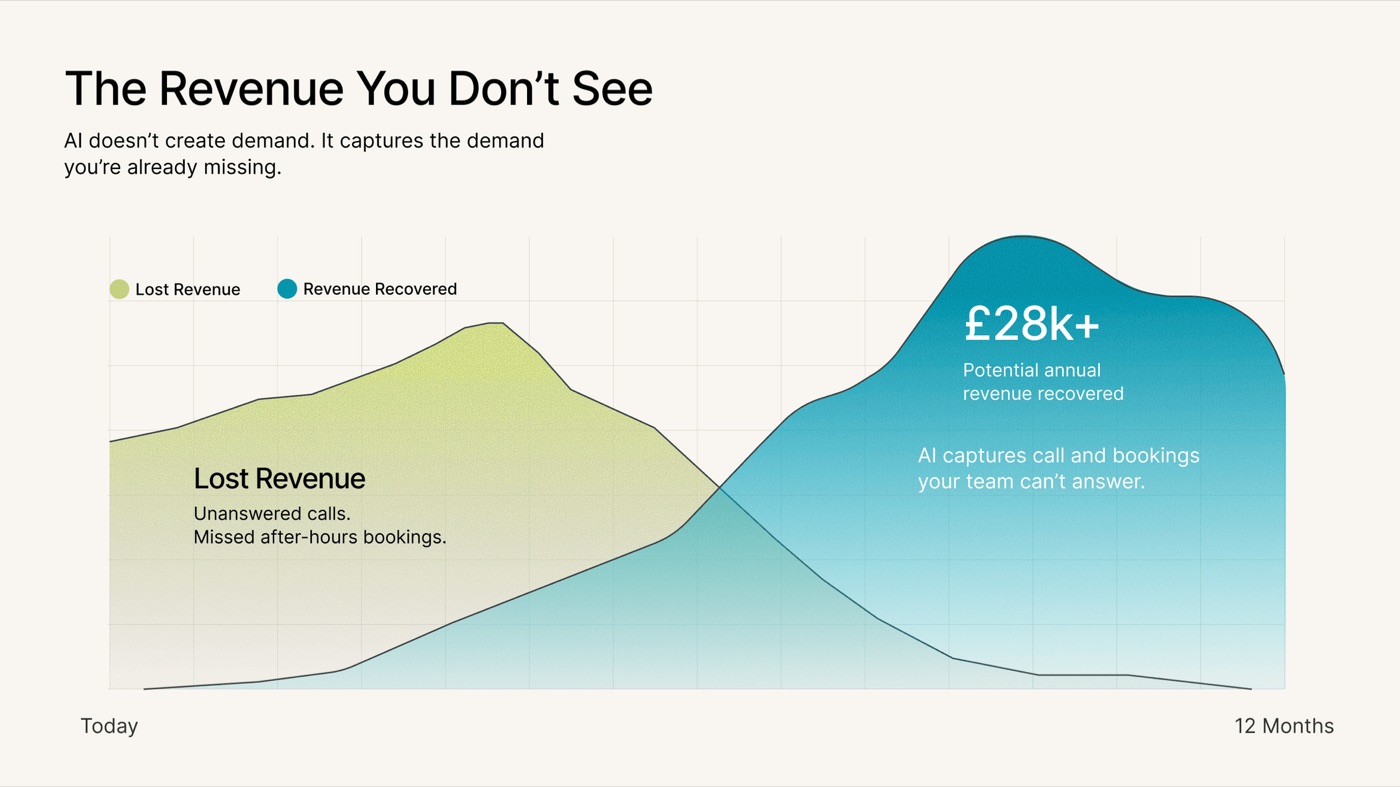
Industry research suggests the average restaurant misses around 150 phone calls a month, and 60 to 80% of those are genuine enquiries from people who want to book a table, place an order or ask a quick question before they visit. With an average conversion rate of around 70%, those unanswered calls can add up to more than $28,000 in lost revenue per location each year.
The way callers behave makes it worse:
- 90% of callers never leave a voicemail.
- Only one in three customers will try calling again after being placed on hold.
- Nearly 60% of reservation calls happen after business hours, when nobody is there to answer.
Most callers don’t wait. They ring the next restaurant on the list, and because winning a new customer costs far more than keeping one, each of those missed calls is expensive.
Why the problem keeps growing
Missed calls usually come down to staffing rather than poor service.
Restaurants across the UK are short of staff and under growing financial pressure. Recent hospitality data shows roughly 107,000 vacancies across the sector, the highest vacancy rate of any UK industry. More than 60% of hospitality businesses report staff shortages, and many have cut opening hours or services as a result. Labour already takes 25 to 35% of total restaurant revenue, so hiring extra front-of-house staff just to answer the phone is hard to justify.
That leaves owners with three poor options:
- Hire more staff and raise operating costs.
- Ask existing staff to juggle guests and phone calls at the same time.
- Accept that some calls, and the customers behind them, will be lost.
AI phone agents give restaurants a fourth option.
The emergence of AI phone agents
Traditional answering services mostly redirect calls. Today’s AI phone agents hold a natural conversation.
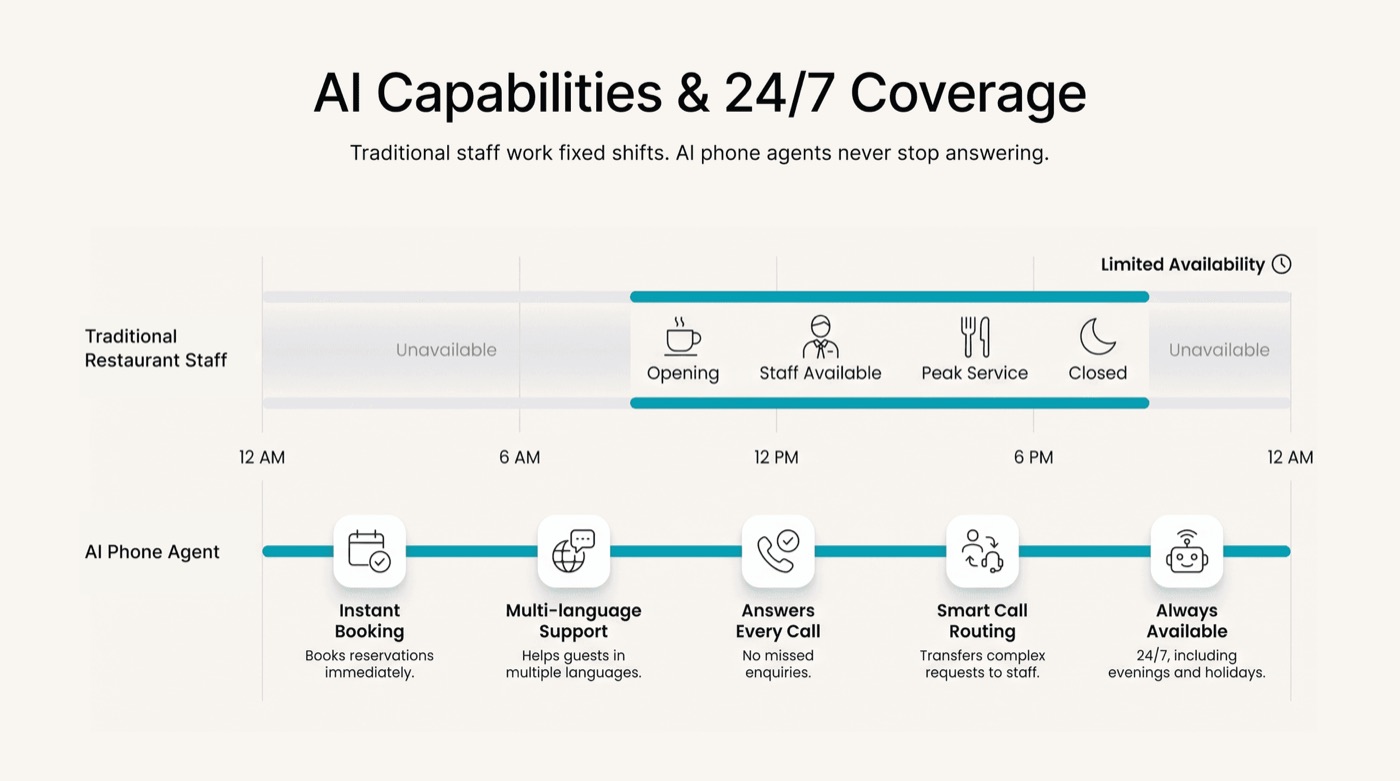
They use speech recognition and conversational AI, and they connect directly to reservation platforms, ordering systems and customer databases, so they can handle routine calls on their own. The caller gets help straight away instead of waiting for someone to be free.
An AI phone agent can:
- Answer questions about opening hours, menus or allergens.
- Book tables in real time and send a confirmation within minutes.
- Take takeaway or delivery enquiries and point callers to your direct ordering channels.
- Record catering or private event requests.
- Talk to international guests in several languages.
- Pass complex requests to staff whenever a person is needed.
Your team still does the hospitality. The AI makes sure every caller gets an answer.
AI vs. traditional staffing: the numbers
For years, front-of-house teams have answered the phone in between serving guests. That will stay central to hospitality, but it can’t keep up with what callers now expect.
Research shows 91% of callers expect a response within three minutes, and many who don’t get one try another restaurant. An AI phone agent answers every call at once, whether it’s the middle of a busy Saturday dinner or 2 a.m. after closing.
The operational benefits:
- Always available: 24/7 call handling, with no breaks or shift changes.
- Scalable: several conversations at the same time.
- Accurate: dietary requirements, birthdays, special requests and booking details are recorded automatically.
- Consistent: every caller gets the same quick, reliable answer.
Some early ROI studies estimate that restaurants can recover hundreds of thousands of dollars a year by capturing orders and reservations that would otherwise be lost, which makes AI one of the few operational investments that can pay for itself fairly quickly.
Platforms such as Growtality show how this is becoming part of everyday restaurant operations. As more restaurants automate, operators increasingly see an AI phone agent as one more tool alongside online ordering, reservations and a CRM.
AI handles the calls so staff can look after guests
A common worry is that AI is meant to replace restaurant staff. In practice it does nearly the opposite.
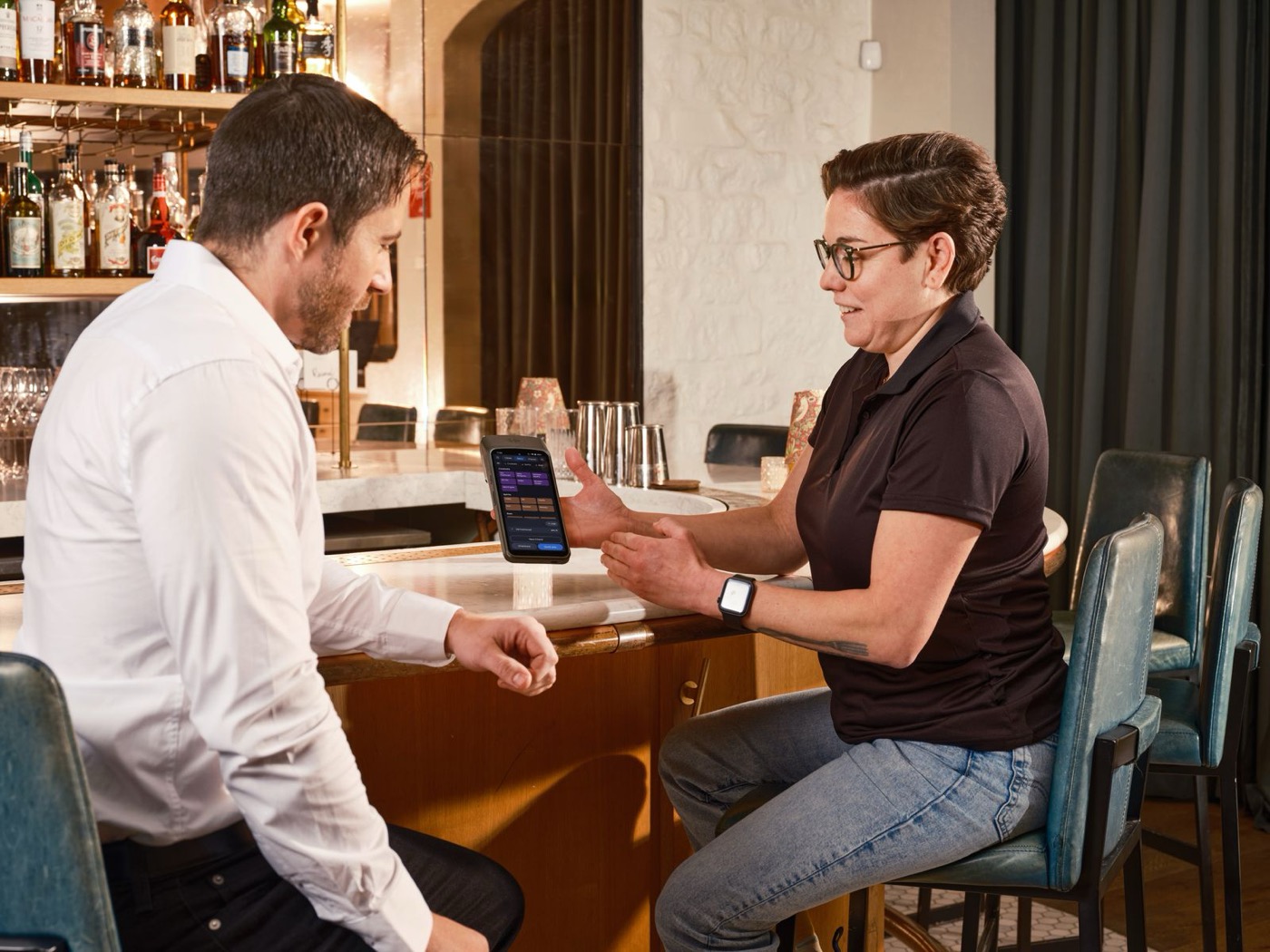
Once routine phone enquiries are handled automatically, hosts and servers get more time for the work that matters most: welcoming guests, sorting out problems and giving people a good evening. Instead of breaking off mid-service to answer questions about opening hours or table availability, staff stay with the guests in the room, and every caller still gets help right away.
People still provide the hospitality. The AI makes sure no potential guest is left waiting on the phone.
Four questions to ask about your phone line
To see where you stand, start with four questions:
- How many calls go unanswered every week?
- When are most calls missed: during service or after hours?
- How much revenue could those missed reservations or orders represent?
- Could automation handle routine enquiries while your staff focus on guests?
For many restaurants, the answers show that the quickest win is replying to the people already trying to get in touch, before spending anything on finding new ones.
Where this is heading
Customer expectations rarely go backwards. Online reservations, QR menus and mobile payments all became normal, and a phone line that always answers is heading the same way.
Over the next decade, the restaurants that do best may well be the ones that make every interaction easy while keeping the warmth guests come for, rather than the ones with the biggest teams. An AI phone agent helps by making sure every call reaches your business, and in a trade where an unanswered call can mean a lost reservation, that’s a real advantage.
Questions owners ask
What is an AI phone agent for restaurants?
Software that answers the restaurant's phone with a natural conversation, takes bookings and orders, and answers questions about the menu, hours and allergens, connected directly to the restaurant's systems.
Why do restaurants miss so many phone calls?
Because the team is busy serving. During a full service, calls ring out while staff look after the guests in front of them, and each unanswered call can be a lost booking.
Will AI phone agents replace restaurant staff?
No. They handle repetitive enquiries so hosts and servers can spend more time with guests in the room, and they pass complex requests to the team.